Housing is a cornerstone of equitable urban development, shaping people’s ability to live with stability, dignity, and security in cities. Across different local contexts, challenges related to housing affordability, adequacy, and access continue to affect who can remain in their communities and who faces displacement or housing insecurity. These challenges are shaped by structural factors such as housing markets, income distribution, and planning systems, and they are not experienced evenly. People with low incomes, larger households, newcomers, and others facing structural barriers in housing markets are often disproportionately affected.
Throughout this section, indicators are presented in ways that reflect local realities and priorities, recognizing that cities emphasize different aspects of housing equity depending on their context, data systems, and policy tools.
Housing affordability reflects the extent to which people can access housing that aligns with their income and household needs. In practice, affordability pressures everyday housing choices, particularly for households with limited options in the local market. It is shaped by broader economic, market, and policy conditions and is not the sole responsibility of local government. Addressing it requires coordinated action across different levels of government and the housing sector. Within this context, the City of Newcastle uses the levers available to support improved housing outcomes locally.
Newcastle housing affordability definition:
Affordable housing and affordable rental housing in Newcastle refers to housing that is affordable for households on very low to moderate incomes. Income categories are defined as a proportion of median household income:
- Very low income: up to 50 percent;
- Low income: 50 to 80 percent;
- Moderate income: 80 to 120 percent.
Based on Newcastle’s definition of housing affordability, 3,839 households in Newcastle were identified as being in need of affordable housing, with families representing the largest share of those seeking support. At the same time, the local rental market offers few affordable alternatives: over a twelve-month period, only 309 rental properties were accessible to households with low income.
5.8%
of all households in Newcastle
are unable to access market
priced rentals.
This figure reflects households whose income levels effectively exclude them from the private rental market, illustrating how constrained housing options can intensify insecurity for people already facing structural barriers in the housing system.
In response to these challenges, the City of Newcastle focuses on increasing the supply of affordable rental housing, improving housing diversity, and addressing both long-term and immediate housing pressures. This includes setting a citywide affordable housing target of 15 percent, applying evidence-based targets for urban renewal and new developments, leveraging planning controls and contributions, and collaborating with community housing providers, government, Aboriginal Land Councils, and industry to deliver solutions.
In Austin, housing affordability is approached through a different local lens. Austin measures affordability based on its capacity to produce or preserve affordable housing units.
Austin housing affordability definition:
Housing affordability in Austin is defined as the availability of housing units affordable to households earning up to 80% of the median family income, where housing costs do not exceed 30% of household income.
Since 2018, Austin has added 11,934 affordable units as part of a long-term goal to deliver 60,000 affordable homes by 2030.
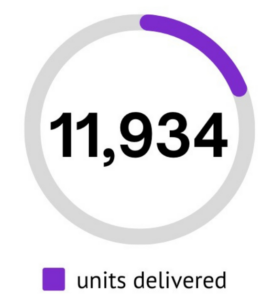
This indicator reflects how local planning tools, funding mechanisms, and policy choices shape access to affordable housing in a rapidly growing city, while also pointing to longer-term efforts to expand supply and reduce displacement pressures.
In Malmö, housing affordability is assessed through indicators such as overcrowding and housing-related financial strain. Overcrowding has remained a persistent challenge, with around 14 percent of households living in overcrowded households, defined as situations where children over the age of 12, or adults who are not a couple, are required to share a bedroom.
At the same time, the share of households experiencing a strained housing economy has steadily decreased over the past decade, dropping from about 13 percent to around 8 percent.
Malmö strained housing economy definition:
In Malmö, a strained housing economy refers to households whose net income does not cover essential living costs, including housing and food, based on the average regional rent large enough to avoid overcrowding.
While spatial constraints continue to shape residents’ experiences of home, fewer households now face severe pressure in meeting essential living costs, pointing to gradual improvements alongside remaining challenges.